

News at Boydens
 4th June 2026
New HHSRS Rules: What Landlords Need to Know About Changes Taking Effect This June
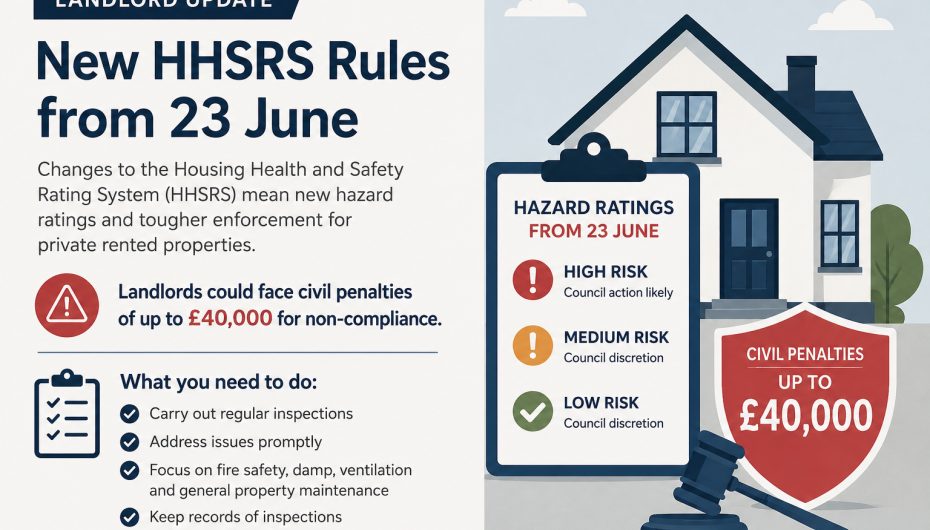
Landlords across England should be aware of important changes to the Housing Health and Safety Rating System (HHSRS), which come into force from 23 June. While the underlying safety standards remain largely unchanged, the way hazards are assessed and enforced is being updated, with potential civil penalties of up to £40,000 for non-compliance.
The changes are designed to make the system easier to understand and apply, but they also strengthen local authorities' ability to take enforcement action where hazards are identified in privately rented homes.
What's Changing?
Under the current HHSRS framework, hazards identified during a local authority inspection are graded from Category A to J. From 23 June, hazards will instead be classified as:
- High Risk
- Medium Risk
- Low Risk
Where a high-risk hazard is identified, councils will generally be required to take enforcement action. For medium and low-risk hazards, local authorities will retain discretion over whether action is necessary.
Fewer Categories, Same Focus on Safety
Although the list of hazards is not changing significantly, several categories have been merged, reducing the total number from 29 to 21.
Historically, the most common serious hazards found in private rented homes have related to:
- Falls and trip hazards
- Excess cold
- Fire safety
- Damp and mould
These remain key areas of focus for inspectors and landlords alike.
Key Hazard Categories Landlords Should Understand
Some of the newly consolidated categories that will be particularly relevant to landlords include:
Indoor Air Pollutants
This category covers exposure to harmful substances such as carbon monoxide, smoke, gases and other chemical pollutants that may affect a tenant's health.
Domestic Hygiene
This includes the suitability and condition of cooking and washing facilities, as well as issues relating to sanitation, drainage and pest infestations.
Falls on the Level
Trip hazards, slips, falls in bathrooms and other accidents occurring on level surfaces now fall under a single category.
Fire and Explosions
The scope of this category has been expanded considerably. It now covers not only fire, smoke and fumes, but also explosions and even structural collapse resulting from fire or explosion.
Collisions, Entrapment and Ergonomics
This category includes risks associated with doors, windows and other fittings that could cause injury through impact, trapping or poor positioning.
Expanded Fire Safety Requirements
One of the most notable updates concerns fire safety. The revised definition of a fire hazard now extends beyond traditional fire and smoke risks to include explosions and structural collapse caused by fire-related incidents.
As a result, a wider range of fire safety concerns may trigger consultation between local authorities and fire and rescue services before enforcement action is taken.
What Should Landlords Do Now?
The good news is that landlords who are already complying with current HHSRS guidance should not need to make significant changes.
However, these updates serve as an important reminder that regular property inspections and proactive maintenance remain essential. Identifying and addressing potential hazards early can help protect tenants, maintain compliance and avoid costly enforcement action.
At Boydens, we encourage all landlords to:
- Carry out routine property inspections
- Address maintenance issues promptly
- Monitor damp, mould and ventilation concerns
- Review fire safety measures regularly
- Keep records of inspections and remedial works
Need Advice?
For a comprehensive list of all 21 hazards and what they cover click the link below:
https://www.nrla.org.uk/resources/licensing-and-local-gov/housing-health-and-safety-rating-system
Understanding changes to landlord legislation can be challenging, particularly as regulations continue to evolve. Our experienced lettings teams across Essex and Suffolk are here to help landlords stay compliant while protecting their investment.
If you would like guidance on your responsibilities as a landlord or support with managing your rental property, contact your local Boydens office today.