

News at Boydens
 22nd June 2026
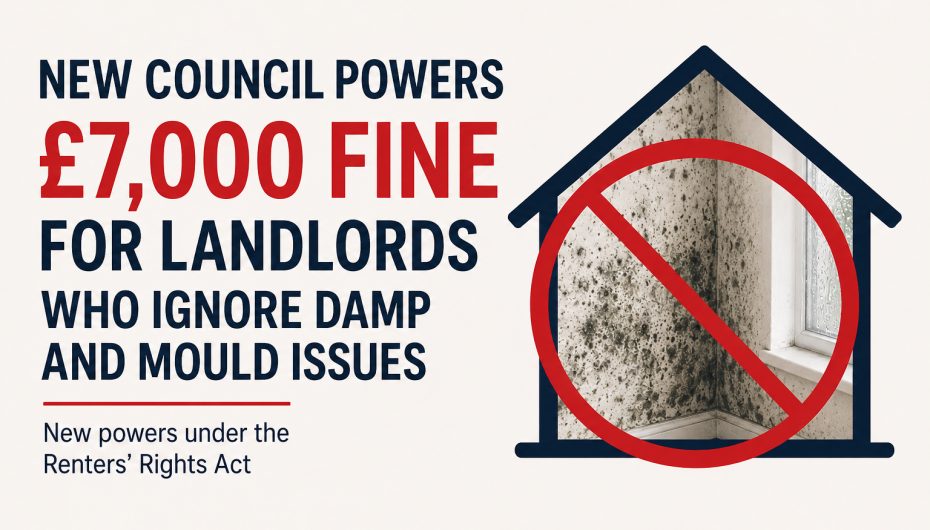
Landlords Face Fines of Up to £7,000 for Failing to Address Damp and Mould
The government has introduced new powers allowing local councils to issue fines of up to £7,000 to landlords who fail to address serious hazards in privately rented homes, including damp and mould.
The new enforcement measure came into force on 22 June as part of the Renters’ Rights Act and is designed to help councils take faster action where landlords fail to maintain safe living conditions for tenants.
What Has Changed?
Local authorities can now impose financial penalties of up to £7,000 where a landlord fails to remedy serious health and safety hazards identified within a rental property. Damp and mould are among the most common concerns, but the new powers also apply to a wider range of serious hazards, including:
- Excess cold and freezing conditions
- Fire risks
- Faulty electrical installations
- Structural defects
- Dangerous property layouts
These hazards fall under the Housing Health and Safety Rating System (HHSRS), which is used by councils to assess risks within residential properties.
Stronger Enforcement for Poor Housing Conditions
The new fines do not replace existing enforcement powers. Councils can already require landlords to carry out repairs, undertake emergency remedial works themselves and recover costs from landlords who fail to act.
The additional penalty is intended to encourage quicker action and provide councils with another tool to tackle poor housing conditions in the private rented sector.
According to government estimates, around one in ten privately rented homes contains at least one serious health and safety hazard.
Updated Housing Safety Standards
Alongside the new penalties, the government has also updated the Housing Health and Safety Rating System for the first time in almost 20 years. The revised framework aims to make it easier for councils to identify hazards and take enforcement action where necessary.
The changes are expected to improve consistency in how issues such as damp, mould, fire risks and electrical safety concerns are assessed across England.
What This Means for Landlords
For responsible landlords, the message is clear: regular property inspections, prompt responses to maintenance reports and proactive property management are more important than ever.
Many cases of damp and mould can be resolved before they become serious hazards if identified early and dealt with correctly. Keeping detailed records of inspections, maintenance works and communication with tenants can also help demonstrate compliance if concerns are raised.
Need Advice on Property Management?
At Boydens, we understand that legislation within the private rented sector continues to evolve. Our experienced lettings teams work closely with landlords to ensure properties remain compliant, well-maintained and attractive to tenants.
If you would like advice on property management, landlord responsibilities or maintaining rental property standards, contact your local Boydens office today.